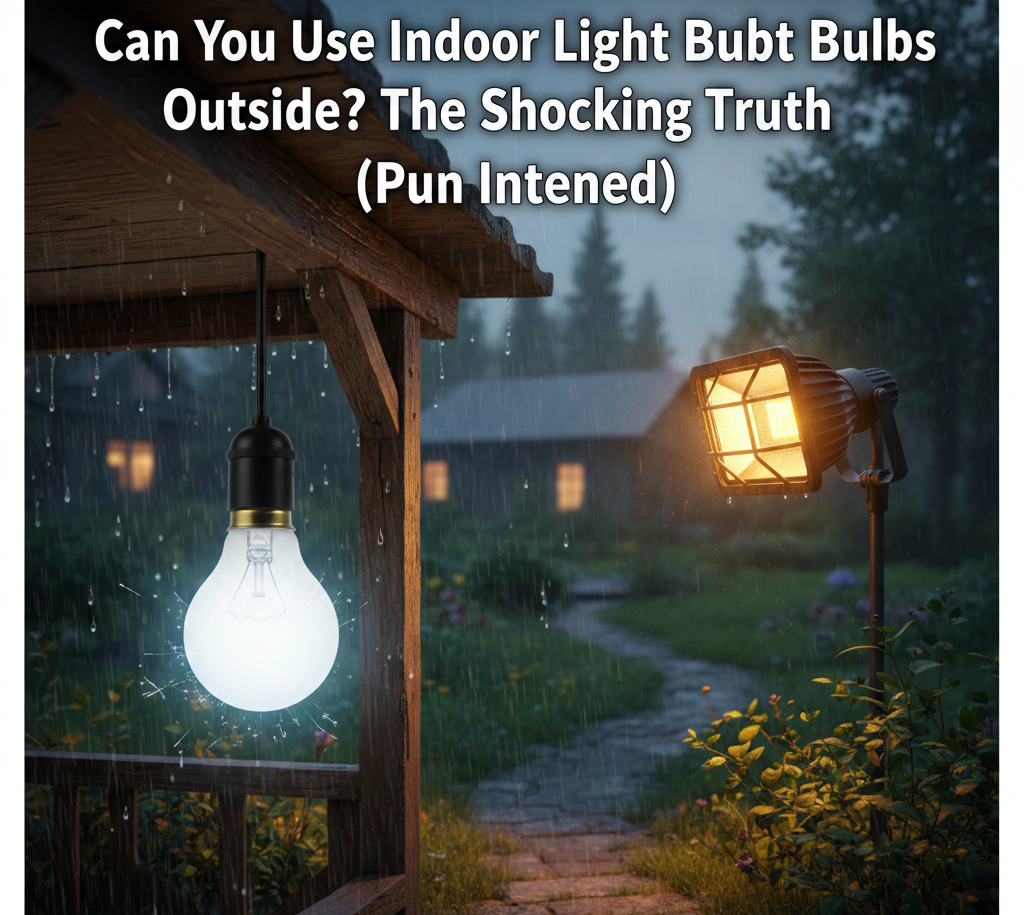
Can You Use Indoor Light Bulbs Outside? The Shocking Truth (Pun Intended)

Hey, Ever Wondered About Those Bulbs?
Picture this: It’s a warm evening, you’re setting up a cozy backyard party, and you grab the nearest bulb from inside. “Can you use indoor light bulbs outside?” you think. Honestly, I’ve been there—staring at my garage shelf, wondering if that cheap LED from the living room would work on the porch. Spoiler: It’s tempting, but not always smart.
The short answer? Usually no, but let’s break it down like we’re fixing this together. Indoor bulbs aren’t built for rain, bugs, or wild temperature swings. Stick one outside, and it might fizzle out faster than ice cream on a hot day. But with 2025’s awesome LED options, there are easy fixes. We’ll cover why it matters, what happens if you try it anyway, and better ways to glow up your outdoor spaces.
Why Indoor Bulbs and Outdoor Life Don’t Mix
Indoor lights live a cushy life—steady temps, no moisture, zero UV blasts from the sun. Outdoors? It’s a jungle out there. Rain splashes, heat bakes, cold snaps freeze, and bugs love to crash the party.
Well, indoor bulbs lack tough seals. They’re rated IP20 or lower (that’s “Ingress Protection”—fancy talk for how well they block dust and water). Drop one in humidity or a drizzle, and moisture sneaks in, causing shorts or corrosion. Boom—your light’s toast.
Heat’s another killer. Indoor LEDs handle about 0–40°C (32–104°F). Outside, summer hits 50°C+ in places like Pakistan or Texas, and bulbs overheat, shortening life from 25,000 hours to maybe 1,000. Cold? They might not even start.
And don’t get me started on bugs. Indoor bulbs don’t have screens; moths dive-bomb and fry inside, making a buzzing mess.
What Happens If You Use Indoor Bulbs Outside Anyway?
Curious what goes wrong? Let’s play out the drama.
First off, short-term thrills, long-term spills. It might light up fine on a dry night. But come morning dew? Water creeps in, sparks fly (literally), and your fixture could short-circuit. Worst case: Fire hazard. Yeah, scary—especially near wood decks or kids playing.
Lifespan crash. A good indoor LED lasts years inside. Outside, expect 50-80% shorter life. UV rays yellow the plastic, heat warps it, and frost cracks seals. I once tried an indoor flood in my shed—lasted two months before it blinked out forever.
Color and brightness fade. Indoor bulbs tune for cozy rooms. Sunlight washes them out, and without UV protection, they dim quick. Your party lights go from vibrant to “meh” fast.
Safety shocks. No weatherproofing means exposed wires or bases. Touch a wet one? ZAP. Not fun, trust me.
In 2025, with energy prices up, wasting bulbs hurts your wallet too. One bad experiment = $5-10 down the drain, times a few? Ouch.
Latest Updates for 2025: Smarter Bulbs, Better Rules
Fast-forward to 2025—lighting tech’s leaped ahead, and rules are tighter. No more guessing games.
LEDs rule now, with 90% of new bulbs being them (per global sales data). Big change: IP65+ ratings standard on outdoors. These block jets of water and dust like champs. Brands push “all-weather” lines that mix indoor ease with outdoor grit.
Energy Star 2025 certs demand better heat sinks—tiny metal bits that whisk away warmth, so bulbs run cool even in 60°C scorchers. Smart bulbs? Philips Hue and Wyze now have outdoor-rated versions with app control, auto-on at dusk, and bug-repellent coatings.
Regulations tightened too. EU and US codes (updated post-2024 floods) ban indoor bulbs in wet outdoor spots. In Asia, monsoon-proof standards mean more factories churning IP66 LEDs. Prices dropped 20% thanks to mass production—$2 outdoor bulbs everywhere.
Pro tip: Check the bulb base. E26/E27? Fine, but pair with weatherproof sockets (GFCI outlets outdoors).
Benefits of Using the Right Outdoor Bulbs (And Why Skip Indoor Ones)
Switch to proper outdoor bulbs, and life’s brighter—literally.
- Longer life: 50,000+ hours vs. indoor’s quick burnout. Saves cash long-term.
- Weather warrior: Rain? Snow? No sweat. IP65 laughs at puddles.
- Energy savers: 2025 LEDs sip 5-10W but shine like 60W oldies. Lower bills, greener planet.
- Brighter vibes: Better optics mean even light, no dark spots on your patio.
- Safer fun: Grounded designs cut shock risk. Peace of mind for family BBQs.
- Cool features: Dimmable, color-changing, motion-sensor. Party mode activated!
Honestly, the upgrade feels like cheating. My porch went from dim to disco without extra wiring.
Types of Bulbs: Indoor vs. Outdoor Showdown
Not all bulbs are equal. Here’s a quick rundown.
Indoor Bulbs (Keep ‘Em Inside)
- Standard LEDs, incandescents (phased out mostly), CFLs.
- Pros: Cheap, cozy glow.
- Cons: No seals, heat-sensitive.
Outdoor Champs for 2025
- LED Floods: Wide beams for garages, patios. “Can you use indoor flood light bulbs outside?” Nope—get IP65 floods instead.
- PAR/GU10 Spots: Pinpoint for paths, trees. UV-resistant coatings.
- String Lights: Festive, now with shatterproof glass-alike plastic.
- Smart Bulbs: WiFi outdoor-rated, voice-controlled via Alexa/Google.
| Feature | Indoor Bulb | Outdoor Bulb |
|---|---|---|
| Water Resistance | None (IP20) | High (IP65+) |
| Temp Range | 0-40°C | -40-60°C |
| Lifespan Outside | Weeks-Months | Years |
| Cost (per bulb) | $1-3 | $3-8 |
| Best For | Rooms | Porches, Gardens |
See? Outdoor wins every time.
Step-by-Step: Safely Lighting Your Outdoor Spaces
Ready to do this right? Follow these easy steps—no tools beyond a screwdriver.
- Assess your spot: Porch? Fully exposed—needs IP65. Covered overhang? IP44 might work.
- Pick the bulb: Match wattage (e.g., 800 lumens = bright porch). Go LED, outdoor-rated.
- Check the fixture: Old socket? Swap for weatherproof cover ($5 at hardware stores).
- Install smart: Turn off power. Screw in gently—outdoor bases are thicker.
- Test it: Dry run first, then wet test with hose.
- Maintain: Wipe dust yearly, check seals.
For strings: Hang 10-20 feet apart, use clips, avoid pooling water.
Quick Hack for Semi-Outdoor Spots
Covered patios? “Can you use indoor LED light bulbs outside” here? Maybe, with a plastic enclosure. Buy $10 bulb guards—they seal everything in.
Common Mistakes to Avoid (Learned the Hard Way)
We’ve all slipped up. Dodge these:
- Ignoring ratings: “It’s just LEDs!” Nope—read the box.
- Overloading sockets: One fixture, one bulb. Daisy-chaining? Fire risk.
- Skipping GFCI: Outlets without ground-fault protection? Instant no-go.
- Hot climates cheat: In Rawalpindi summers or Arizona, double-down on heat-rated.
- Bug neglect: No screens? Moths = short circuits.
- Cheap fakes: Amazon knockoffs fail fast. Stick to trusted like GE, Osram.
One laugh: I once used an indoor bulb in a birdhouse light. Birds loved it… until it rained. Epic fail.
Creative Ways to Use Outdoor Bulbs Indoors (Bonus Flip!)
Wait, what? Outdoor bulbs inside? Totally fine! They’re tougher, last longer, and sip energy. Use floods for art studios, spots for kitchens. Just match the vibe—warm white (2700K) for cozy rooms.
Pro: No worries if you splash water cleaning. Con: Slightly pricier upfront.
Budget Tips for 2025 Glow-Ups
Lighting outdoors doesn’t have to break the bank.
- Shop sales: Post-holiday deals hit 40% off.
- Bulk buy: 12-packs under $20.
- Solar swaps: No wiring, auto-on. 2025 models charge in partial shade.
- DIY fixtures: Thrift jars + outdoor LEDs = mason jar lanterns.
- Energy rebates: Many countries offer $ for efficient swaps.
Total porch makeover? Under $50.
Weather-Specific Advice Around the World
Global readers, this bit’s for you.
- Monsoon zones (Pakistan, India): IP66 minimum. Silicone seals.
- Snowy winters (Canada, Europe): -40°C rated, anti-frost.
- Desert heat (UAE, Australia): Ceramic heat sinks.
- Humid tropics (Florida, SE Asia): Anti-corrosion coatings.
Match your climate—bulbs last 2x longer.
Step-by-Step: Troubleshooting a Failed Outdoor Light
Bulb out? Don’t panic.
- Power off.
- Unscrew, inspect for water/bugs.
- Dry fully (rice bag hack).
- Clean contacts with alcohol wipe.
- Test indoors first.
- Replace if cracked.
90% fixable!
Wrapping It Up: Light Smart, Party Hard
So, can you use indoor light bulbs outside? Short answer: Better not—save the drama for fireworks. Grab outdoor-rated LEDs instead. They’re cheap, tough, and turn any evening into magic. You’ve got this—your backyard’s about to shine brighter than ever. Go experiment safely, and tell me how it glows!
FAQs
Can you use indoor flood light bulbs outside?
Not really—floods need wide seals for rain. Swap for IP65 floods; they handle splashes way better.
What happens if you use an indoor light bulb outside?
It might work briefly, but moisture shorts it, heat kills lifespan, and safety risks spike. Expect early burnout.
What happens if you use indoor bulbs outside in the rain?
Big trouble—water inside causes sparks or fires. Always use sealed outdoor ones.
Can you use indoor light bulbs outdoors on a covered porch?
Possibly, if super protected. But for peace of mind, outdoor bulbs are still smarter and longer-lasting.
Can you use outdoor light bulbs indoors?
Yep! They’re durable and efficient inside too—just pick the right color temp for your room.
Are 2025 LEDs safe for all outdoor uses?
Most IP65+ ones, yes. Check ratings and use GFCI outlets for zero worries.