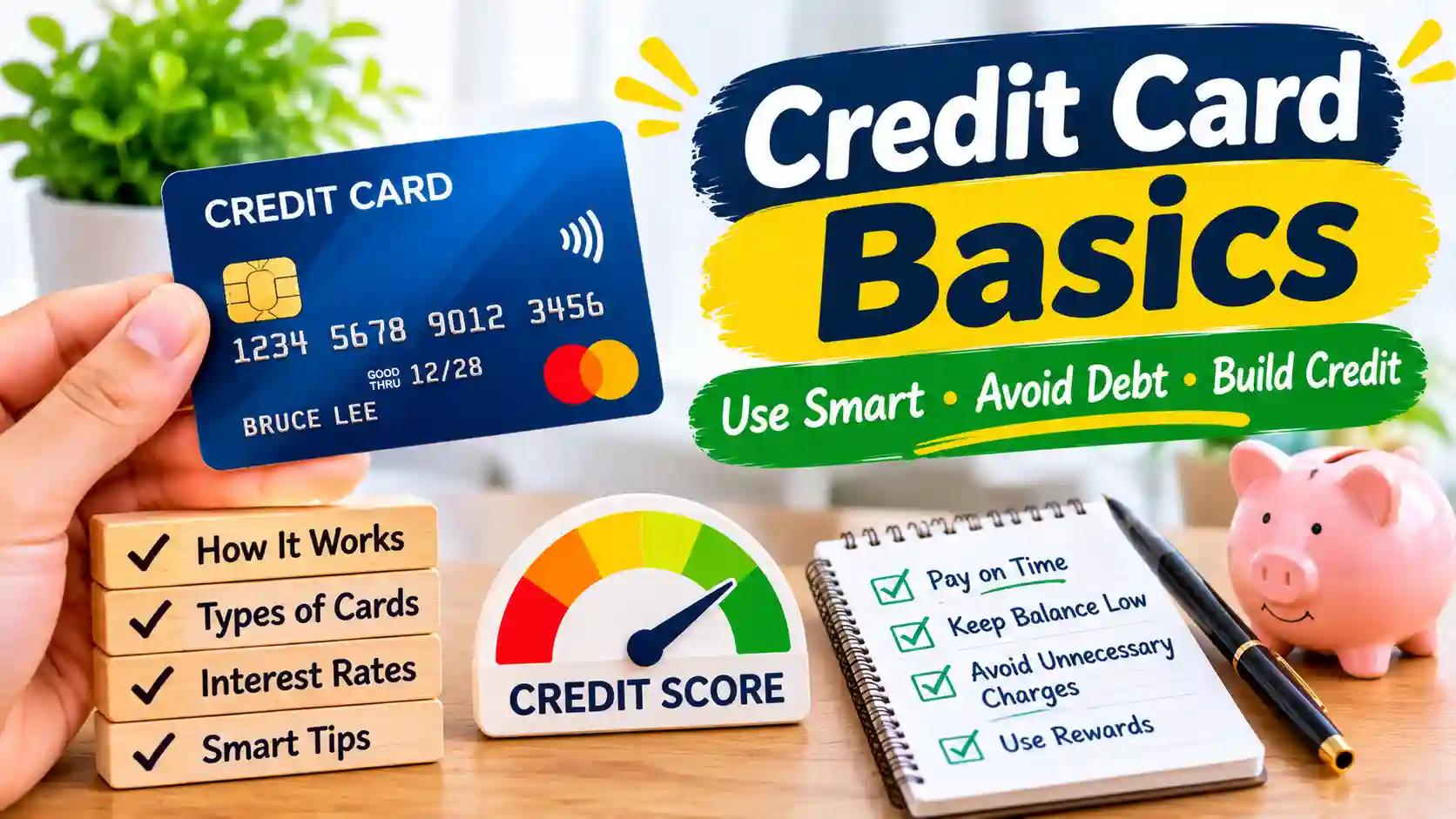
Credit cards are widely used for shopping, travel, online payments, and everyday expenses. They can also help establish a credit history when managed responsibly. However, they are not extra income or free money.
If you are new to credit cards, the terminology can feel confusing. Terms such as APR, billing cycle, statement balance, minimum payment, and credit utilization all affect how your account works.
This guide explains the basics in plain language so you can understand what happens when you use a credit card and how to avoid common financial mistakes.
In This Guide
- What Is a Credit Card?
- How Does a Credit Card Work?
- Important Credit Card Terms
- Understanding the Billing Cycle
- How Credit Card Interest Works
- What Is a Minimum Payment?
- Understanding Your Credit Limit
- How Credit Cards Affect Your Credit Score
- Common Credit Card Fees
- How to Use a Credit Card Responsibly
- Credit Card Mistakes to Avoid
- How to Choose Your First Credit Card
- Frequently Asked Questions
1. What Is a Credit Card?
A credit card is a payment card issued by a bank or financial institution that allows you to borrow money up to an approved limit to make purchases.
Instead of taking money directly from your bank account at the time of purchase, the card issuer pays the merchant. You then repay the amount you borrowed according to your card agreement.
Your card issuer sends you a statement showing your purchases, payments, fees, and the amount you owe. If you pay your full statement balance by the due date, you can generally avoid interest on eligible purchases when your card has a grace period, and you qualify for it.
Remember
A credit card is borrowed money. Every purchase creates a payment obligation, even if you do not have to repay it immediately.
2. How Does a Credit Card Work?
A credit card works through a simple borrowing and repayment process. Your card issuer gives you access to a specific credit limit, and you can use part of that limit for approved purchases.
- You make a purchase: You use your card online, in a store, or for an eligible service.
- The payment is processed: The card network and issuer process the transaction.
- Your balance increases: The purchase amount is added to your account balance.
- You receive a statement: At the end of the billing cycle, your issuer lists your transactions and payment amount.
- You make a payment: You pay at least the required minimum by the due date. Paying the full statement balance is generally the better option.
For example, if you make purchases totaling $400 during a billing cycle, your statement may show a $400 statement balance, assuming there are no other transactions, credits, or fees.
Paying that amount in full by the due date can help you avoid interest on eligible purchases if your account qualifies for a grace period.
3. Important Credit Card Terms You Should Know
Understanding a few common terms can make credit card statements and agreements much easier to read.
Annual Percentage Rate (APR)
APR represents the annualized cost of borrowing on your credit card. Your card may have different APRs for purchases, balance transfers, and cash advances. The rate and how interest is calculated depend on your agreement.
Statement Balance
The statement balance is the amount you owed when your billing cycle ended. It includes the transactions and other account activity posted during that cycle.
Current Balance
Your current balance reflects more recent account activity, including transactions that may have occurred after your latest statement was issued.
Minimum Payment
This is the smallest amount your issuer requires you to pay by the due date to keep the account from being treated as unpaid under the card agreement. Paying only this amount can make debt more expensive over time.
Grace Period
A grace period is the time between the end of a billing cycle and the payment due date. Many cards offer an interest-free grace period on purchases if you meet the terms, such as paying the full statement balance on time.
Credit Utilization
Credit utilization describes how much of your available revolving credit you are using. It is commonly expressed as a percentage and can influence credit scores.
4. Understanding the Credit Card Billing Cycle
A billing cycle is the period during which your credit card transactions are recorded for a statement. It commonly lasts around a month, although the exact length depends on the issuer.
When the billing cycle ends, your issuer prepares a statement. That statement shows the amount due and the payment deadline.
Example of a Billing Cycle
- October 1: A new billing cycle begins.
- October 15: You purchase groceries and other essentials.
- October 31: The billing cycle ends.
- November 1: Your statement becomes available.
- November 25: Your payment due date, based on this example.
These dates are illustrative, not standard payment dates. Always check your own statement or card account for the actual closing date and due date.
5. How Does Credit Card Interest Work?
Credit card interest is the cost of carrying an unpaid balance. If you do not pay the full statement balance by the due date, interest may be charged according to your card's APR and agreement.
Many cards calculate interest using a daily periodic rate applied to the balance each day. The exact calculation method can vary by issuer and balance type.
A Simple Interest Example
Imagine you carry an average balance of $1,000 on a card with a 24% APR. A simplified estimate of one month's interest would be:
Estimated monthly interest:
$1,000 × 24% ÷ 12 = $20
This is only an illustration. Actual interest depends on daily balances, payment timing, fees, the issuer's calculation method, and applicable terms.
The longer you carry a balance, the more interest you may pay. That is why paying your statement balance in full, when possible, is generally a smart habit.
6. What Is a Minimum Payment?
Your minimum payment is the smallest amount you must pay by the due date according to your card agreement. It may be calculated using a percentage of your balance, a fixed amount, interest and fees, or a combination of methods.
Paying the minimum can help you avoid a missed payment, but it does not mean your debt is under control. Most of your payment may go toward interest and fees rather than reducing the original balance.
Why Paying Only the Minimum Can Be Expensive
- Your balance may take much longer to repay.
- You may pay significantly more interest over time.
- Your available credit may remain limited.
- New purchases can make the balance grow again.
Whenever your budget allows, aim to pay the full statement balance. If that is not possible, pay more than the minimum and create a realistic repayment plan.
7. Understanding Your Credit Limit
Your credit limit is the maximum amount your issuer allows you to borrow on your card. It is based on factors such as your credit history, income information, and the issuer's approval criteria.
For example, if your credit limit is $3,000 and your current balance is $700, you generally have around $2,300 in available credit, subject to pending transactions and other account activity.
Reaching your credit limit can lead to declined transactions or other consequences under your card agreement. Some issuers may allow transactions above the limit, but you should never assume that they will.
8. How Credit Cards Affect Your Credit Score
Credit cards can help you establish or build a credit history when you manage them responsibly. Credit scoring systems may consider several aspects of your credit behavior.
Payment History
Making payments on time is important. Late payments can negatively affect your credit history and may result in fees or other consequences.
Credit Utilization
Using a large portion of your available credit may negatively affect some credit scores. Keeping balances relatively low compared with your limits can be helpful, although there is no single utilization percentage that guarantees a particular score.
Length of Credit History
The age of your credit accounts may be considered by some scoring models. Closing an older account can affect your available credit and other credit history factors.
New Credit Applications
Applying for several credit accounts within a short period may lead to multiple hard inquiries, depending on the type of application and scoring model.
Credit scoring systems differ between countries and providers. The factors used to calculate a score are not identical everywhere.
9. Common Credit Card Fees
A credit card may include fees in addition to interest. Review the card's pricing information before applying.
- Annual fee: A yearly charge for holding the card.
- Late payment fee: A fee that may apply when you miss the required payment deadline.
- Balance transfer fee: A charge for moving debt from one credit account to another.
- Cash advance fee: A charge for withdrawing cash using your credit card.
- Foreign transaction fee: A fee that some cards charge for purchases processed in a foreign currency or outside your home country.
Some cards have no annual fee or foreign transaction fee, while others do. Compare the full fee schedule rather than choosing a card based on one advertised feature.
10. How to Use a Credit Card Responsibly
Responsible credit card use starts with treating your card as a payment tool rather than extra income.
1. Pay Your Statement Balance in Full
If your budget allows, pay the full statement balance by the due date. This can help you avoid interest on eligible purchases when your account has a grace period, and you qualify for it.
2. Set Up Payment Reminders
Use calendar alerts or your issuer's payment reminders to avoid forgetting a due date. Automatic payments can also help, but make sure enough money is available in your bank account.
3. Keep Spending Within Your Budget
Before using your card, make sure the purchase fits your monthly budget. Do not spend more simply because your issuer has given you a higher limit.
4. Review Your Statements
Check transactions regularly. If you notice an unfamiliar charge or possible billing error, contact your card issuer promptly and follow its dispute process.
5. Protect Your Card Details
Never share your PIN, password, or one-time security codes. Use secure websites, enable transaction alerts, and contact your issuer immediately if your card is lost or stolen.
6. Understand Your Rewards
Cashback, points, and travel rewards can be useful, but they should not encourage unnecessary spending. A reward is rarely worth paying high interest or fees.
11. Credit Card Mistakes to Avoid
New cardholders sometimes make mistakes because they do not fully understand how borrowing works. Avoid these common problems:
- Paying only the minimum: This can keep debt around for a long time and increase interest costs.
- Missing payment deadlines: Late payments may lead to fees and credit history problems.
- Maxing out the card: High balances can make repayment harder and increase credit utilization.
- Taking cash advances casually: These transactions may have separate fees and interest rules.
- Applying for too many cards: Multiple applications can make it harder to manage accounts and may generate hard inquiries.
- Ignoring statements: You could miss unexpected charges, fees, or important account notices.
- Spending for rewards: Rewards do not justify purchases you cannot afford.
12. How to Choose Your First Credit Card
The right first credit card depends on your financial situation, credit history, location, and spending habits. A card with attractive rewards is not automatically the best option.
Compare these features before applying:
- Annual fee: Check whether the yearly cost is worth the benefits.
- APR: Understand the interest rate that may apply if you carry a balance.
- Eligibility requirements: Check the issuer's income, age, residency, and credit history requirements.
- Payment flexibility: Review available payment methods and due-date options.
- Rewards: Compare cashback or points based on purchases you already make.
- Fees: Review late payment, cash advance, balance transfer, and foreign transaction fees.
- Security features: Look for transaction alerts, account controls, and a clear fraud-reporting process.
Read the full card agreement and pricing disclosure before accepting an offer. If you are not confident that you can manage repayments, consider waiting until your budget is more stable.
13. Frequently Asked Questions
Is a credit card free to use?
Not always. Some cards have no annual fee, but interest, late payment fees, foreign transaction fees, or other charges may apply. You can often avoid purchase interest in paying the full statement balance on time when you qualify for a grace period.
Should I pay my credit card in full every month?
Generally, yes. Paying the full statement balance by the due date is a good habit and can help you avoid interest on eligible purchases when your card offers a grace period.
Does using a credit card build credit?
It can help establish a credit history when the issuer reports your account activity, and you manage the account responsibly. The effect depends on the credit reporting and scoring systems used in your country.
What happens if I miss a credit card payment?
You may be charged a late fee, and interest or other consequences may apply. A late payment may also be reported to credit bureaus under the applicable rules. Contact your issuer as soon as possible if you think you cannot pay on time.
Is it better to use a debit card or a credit card?
Both have advantages. A debit card generally uses money in your bank account, while a credit card involves borrowing. The better choice depends on your spending habits, financial goals, and ability to repay borrowed money.
Does checking my credit card balance hurt my credit score?
Checking your own account balance or credit report through an authorized personnel access method generally does not create a hard inquiry. Applying for new credit may involve a hard inquiry.
Can I have a credit card without paying interest?
You may avoid interest on eligible purchases by paying your full statement balance by the due date if your card has a grace period, and you meet its conditions. Cash advances and other transactions may have different interest rules.
Final Thoughts
Credit cards can be useful financial tools when you understand how they work and use them within your budget. Knowing your billing cycle, APR, minimum payment, credit limit, and fees can help you make better decisions.
Start with manageable spending, pay on time, review every statement, and avoid carrying a balance whenever possible. A credit card should support your financial goals, not make them harder to achieve.
One Simple Rule to Remember
Only charge purchases you can reasonably afford to repay. Responsible habits matter more than rewards or a high credit limit.
Disclaimer
This article is for educational and informational purposes only and should not be considered financial, legal, or credit advice. Credit card terms, consumer protections, interest calculations, and credit reporting rules vary by country and issuer. Always review your card agreement and consult a qualified professional when necessary.
Meet the Author

Bruce Lee
Bruce Lee is the author behind Nksaas. He focuses on creating accessible personal finance content covering budgeting, saving, credit basics, side hustles and beginner investing concepts.
Email: info.nksaas@gmail.com