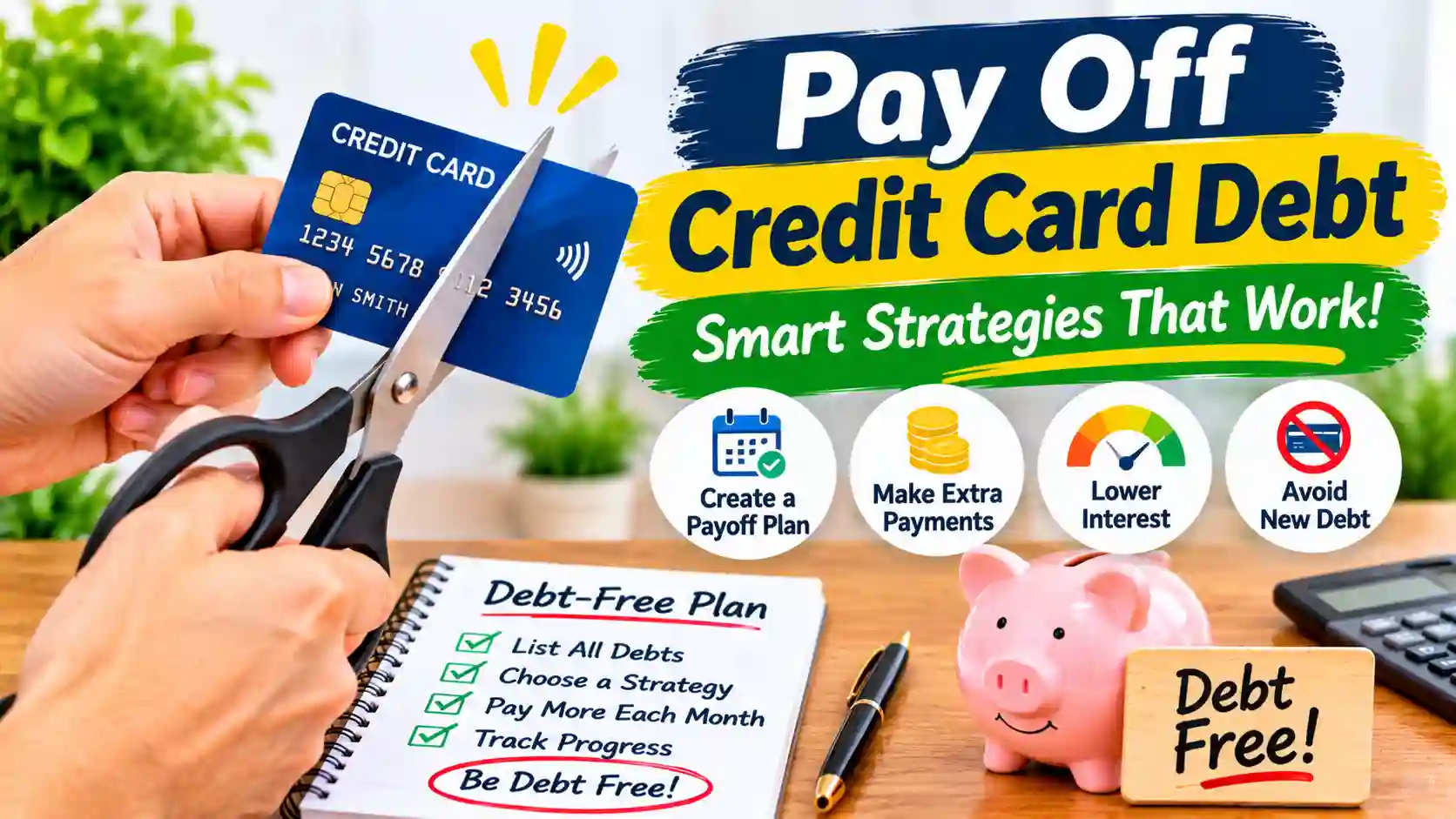
Credit card debt can be stressful, especially when balances grow because of interest, fees, and everyday spending. Making only minimum payments may keep an account current, but it can take a long time to repay what you owe.
The most effective way to tackle debt is to understand your current balances, create a realistic budget, and follow a repayment strategy you can maintain. You do not need a complicated financial system to begin making progress.
Whether you have one credit card balance or several, this guide explains practical ways to organize your debt and work toward paying it off.
In This Guide
1. Understand Your Credit Card Debt
Before choosing a repayment method, understand exactly how much you owe. If you have multiple cards, it is easy to lose track of balances, interest rates, and payment deadlines.
Start by reviewing your latest statements and writing down the details of every account.
Make a List of Your Credit Card Balances
- Credit card name or issuer.
- Current outstanding balance.
- Annual Percentage Rate (APR).
- Minimum payment amount.
- Payment due date.
- Any annual fees or other charges.
This gives you a clear picture of your debt and helps you decide where extra payments should go.
Example of a Debt Overview
Imagine you have three credit cards with the following balances:
Illustrative Credit Card Balances
- Card A: $500 balance at 19% APR.
- Card B: $1,500 balance at 24% APR.
- Card C: $3,000 balance at 18% APR.
Total credit card debt: $5,000
These figures are examples only. Your actual repayment plan should use your own statement balances, rates, and payment requirements.
Once you know your total debt, you can create a realistic plan instead of making random payments.
2. Stop Adding Unnecessary Debt
It is difficult to reduce a credit card balance if new purchases keep replacing the money you have paid back. One of the first steps is to prevent your debt from growing.
You do not necessarily have to close every credit card. Instead, review your spending and avoid using credit for purchases you cannot comfortably repay.
Practical Ways to Control New Spending
- Use a debit card or cash for everyday purchases when appropriate.
- Remove saved credit card details from shopping websites if they encourage impulse purchases.
- Pause non-essential subscriptions and recurring expenses.
- Plan grocery shopping before visiting stores.
- Avoid using credit cards for cash advances unless you fully understand the costs.
- Set a weekly spending limit for non-essential purchases.
If you need your card for essential expenses, include those purchases in your budget and plan how you will repay them. The goal is to prevent your overall balance from increasing.
3. Create a Debt Repayment Budget
A budget helps you understand how much money is available for debt payments after covering essential expenses.
Start by listing your monthly income and necessary costs. Then identify expenses you can reduce without putting your basic needs at risk.
List Your Monthly Expenses
- Housing and utilities.
- Groceries and household essentials.
- Transportation.
- Insurance and healthcare.
- Minimum debt payments.
- Other necessary financial commitments.
Find Money for Extra Payments
Once essential expenses are covered, decide how much extra you can put toward your credit card debt.
For example, if you have $250 left after essential expenses and required payments, you might use part or all of that amount for additional debt repayment, depending on your savings needs and financial priorities.
Keep Your Plan Realistic
A repayment amount that is too aggressive can leave you short of money for essentials and unexpected expenses. Choose an amount you can maintain consistently.
If you do not already have any emergency savings, consider building a small financial buffer while making required debt payments. This can help reduce the risk of relying on credit again when an unexpected expense occurs.
4. Try the Debt Snowball Method
The debt snowball method focuses on paying off your smallest debt first, regardless of its interest rate.
You continue making the minimum payment on every account. Any extra money goes toward the card with the smallest balance. Once that balance is cleared, you move the extra payment to the next smallest debt.
How the Debt Snowball Method Works
- List all your credit card balances from smallest to largest.
- Make the required minimum payment on every card.
- Put additional money toward the smallest balance.
- After paying it off, move that payment amount to the next card.
- Repeat until all targeted balances are repaid.
Example of the Snowball Method
Using the earlier example, your balances are:
- Card A: $500.
- Card B: $1,500.
- Card C: $3,000.
With the snowball method, you focus extra payments on Card A first because it has the smallest balance. After clearing it, you focus on Card B, followed by Card C.
Benefits of the Snowball Method
- You may pay off your first account relatively quickly.
- Small wins can make the process feel more manageable.
- You have fewer accounts to track as balances are cleared.
- It can help maintain motivation during a long repayment process.
Potential Disadvantage
You may pay more interest than with an interest-first approach if a larger balance has a much higher APR. This method prioritizes motivation rather than minimizing interest costs.
5. Try the Debt Avalanche Method
The debt avalanche method focuses on the debt with the highest interest rate first. It is often useful for people who want to reduce the total interest paid.
As with the snowball method, you continue making minimum payments on all accounts. You direct extra money toward the card with the highest APR.
How the Debt Avalanche Method Works
- List your credit card balances and interest rates.
- Arrange the accounts from highest APR to lowest APR.
- Make the minimum payment on every card.
- Put extra money toward the highest-interest balance.
- Once that balance is cleared, move to the next-highest APR.
- Continue until your targeted credit card debt is repaid.
Example of the Avalanche Method
Using the same three balances:
- Card A: $500 at 19% APR.
- Card B: $1,500 at 24% APR.
- Card C: $3,000 at 18% APR.
The avalanche method prioritizes Card B because it has the highest interest rate, even though it does not have the smallest balance.
Benefits of the Avalanche Method
- It targets the most expensive debt first.
- It can reduce total interest costs when payments and other terms are comparable.
- It provides a clear order for repayment.
- It can be a good option for people who are comfortable with a longer first payoff milestone.
Potential Disadvantage
If the highest-interest debt also has a large balance, it may take longer to pay off the first account. Some people find it harder to stay motivated without an early win.
6. Debt Snowball vs. Debt Avalanche: Which Is Better?
Both methods can help you repay credit card debt. The right option depends on your motivation, interest rates, balances, and financial behavior.
Choose the Method That Fits Your Situation
Debt snowball: Focuses on the smallest balance first and can provide early progress.
Debt avalanche: Focuses on the highest interest rate first and can reduce borrowing costs.
Here is a simple comparison:
- Choose snowball if small wins help you stay motivated and follow through.
- Choose avalanche if minimizing interest costs is your main priority and you can stay committed.
- Choose a hybrid approach if you need to clear one small balance first, then want to focus on higher-interest debt.
The most important thing is to keep making all required payments and avoid adding unnecessary balances.
7. Pay More Than the Minimum
Your minimum payment is generally the smallest amount required by your issuer to keep your account from being treated as unpaid under the agreement. However, paying only the minimum can make repayment take much longer.
A larger payment usually reduces the balance faster, which can also reduce future interest charges, depending on how your issuer calculates interest.
Why Extra Payments Matter
- More money goes toward reducing the outstanding balance.
- You may pay less interest over time.
- Your available credit may recover as balances fall.
- You can make faster progress toward clearing the account.
Before making extra payments, check your card agreement for any relevant payment allocation rules. If you have balances with different interest rates on the same account, the issuer may apply payments according to specific legal and contractual requirements.
8. Explore Ways to Reduce Credit Card Interest
High interest rates can make debt repayment more difficult. Depending on your circumstances, there may be ways to reduce the cost of borrowing.
Ask Your Issuer About a Lower APR
Contact your card issuer and ask whether a lower interest rate is available. Your payment history, account standing, and current offers may influence the response.
A rate reduction is not guaranteed, but asking can help you understand your options.
Consider a Balance Transfer
A balance transfer moves eligible debt from one credit account to another. Some cards offer promotional low or zero-interest periods for transferred balances.
However, balance transfers often include a transfer fee, and promotional rates have conditions and expiration dates.
Before accepting an offer, compare:
- The balance transfer fee.
- The promotional interest rate.
- How long the promotional period lasts.
- The APR that applies after the promotion ends.
- Any eligibility requirements.
- Whether new purchases have a different interest rate.
A balance transfer can help in some situations, but it does not remove the debt. You still need a repayment plan before the promotional period ends.
Review Debt Consolidation Options
Debt consolidation combines multiple debts into a single loan or repayment arrangement. Depending on the interest rate, fees, repayment period, and eligibility requirements, it may make payments easier to manage.
Compare the total cost of the new arrangement with your current debts. A lower monthly payment does not always mean you will pay less overall, especially if the repayment term is much longer.
Important Warning
Avoid taking on new debt without understanding the full cost. Consolidation or balance transfers can create additional problems if you continue using your old credit cards without changing spending habits.
9. Find Extra Money for Debt Payments
Even a modest extra payment can help you make progress. Look for realistic ways to free up money without cutting essential expenses.
Review Monthly Subscriptions
Check streaming services, memberships, apps, and other recurring charges. Cancel services you no longer use.
Reduce Flexible Spending
Consider spending less on dining out, impulse shopping, entertainment, or convenience purchases for a limited period.
Sell Items You No Longer Need
Unused electronics, clothing, furniture, and household items may be worth selling. Use the money to make an additional debt payment.
Explore Additional Income
Depending on your skills and available time, you could consider freelance work, tutoring, delivery services, or other suitable side income opportunities.
Put Unexpected Money to Work
If you receive a bonus, gift, refund, or other unexpected income, consider putting a portion toward debt after accounting for essential needs and savings priorities.
10. Contact Your Card Issuer if You Are Struggling
If you cannot afford your minimum payments, do not ignore the problem. Contact your card issuer as early as possible and explain your situation.
Depending on the issuer and your circumstances, possible options may include:
- A temporary reduced payment arrangement.
- A lower interest rate for a limited period.
- A hardship program.
- A revised repayment schedule.
- Information about available financial support.
These options are not guaranteed. Ask about the effect on fees, interest, account status, credit reporting, and future card use before agreeing to any arrangement.
You may also be able to contact a reputable nonprofit credit counseling organization or an authorized debt advice service in your country. Be cautious of companies that demand large upfront fees or guarantee that they can eliminate your debt.
11. Track Your Repayment Progress
A repayment plan works best when you review it regularly. Tracking your balances can help you see how much progress you have made and identify problems early.
Create a Simple Monthly Debt Review
- Record the balance of every card.
- Check whether all payments were made on time.
- Review interest and fees charged.
- Compare current balances with the previous month.
- Adjust your repayment amount if your income or expenses change.
You can use a spreadsheet, budgeting app, or simple notebook. The best tracking method is one you will actually use.
Celebrate Small Milestones
Paying off your first card, reducing your total debt by 10%, or completing several months of on-time payments are meaningful milestones.
Recognize your progress without making expensive purchases that create new debt.
12. Credit Card Debt Repayment Mistakes to Avoid
A repayment strategy can become less effective when avoidable mistakes interrupt your progress.
- Ignoring minimum payments: Always account for required payments on every active debt.
- Only paying the minimum: This may extend repayment and increase interest costs.
- Continuing unnecessary spending: New purchases can cancel out your repayment progress.
- Choosing an unrealistic budget: An overly strict plan may be difficult to maintain.
- Ignoring interest rates: Understanding APR helps you choose a suitable repayment strategy.
- Taking a new loan without comparing costs: Consolidation is not automatically cheaper.
- Ignoring lender communication: Missing notices can cause you to overlook important account changes.
- Trusting guaranteed debt elimination offers: Be careful with companies making unrealistic promises.
13. What to Do After Paying Off Credit Card Debt
Paying off your credit card debt is a major financial achievement. The next step is to build habits that help prevent the same problem from returning.
Build an Emergency Fund
Unexpected expenses can make people rely on credit cards again. Start building a separate savings reserve that can help cover emergencies.
Keep a Monthly Budget
Continue tracking income, essential expenses, savings, and discretionary spending. A budget helps you make spending decisions before problems develop.
Use Credit Cards Carefully
If you keep your cards open, use them for purchases you can afford to repay. Pay statements on time and review account activity regularly.
Redirect Old Debt Payments Toward Savings
If you were paying an extra $200 each month toward debt, consider directing some of that money toward emergency savings or another financial goal once your debt is cleared.
The habits that helped you repay debt can also help you build a more stable financial future.
Final Thoughts
Paying off credit card debt takes a clear plan, consistent payments, and realistic spending habits. Start by understanding your balances and interest rates, then choose a repayment strategy that fits your needs.
The debt snowball method can help you build momentum through small wins, while the debt avalanche method focuses on reducing interest costs. Both can work when you remain consistent and avoid adding unnecessary debt.
You do not have to solve everything in one month. Focus on the next manageable payment and keep moving forward.
Your First Step Today
Write down every credit card balance, APR, minimum payment, and due date. Once you know exactly what you owe, you can choose a repayment method and begin taking control of your debt.
Disclaimer
This article is for educational and informational purposes only and should not be considered financial, legal, tax, or debt advice. Interest rates, repayment rules, debt relief options, and consumer protections vary by country and provider. Review your account agreements and consult a qualified financial or debt adviser when necessary.
Meet the Author

Bruce Lee
Bruce Lee is the author behind Nksaas. He focuses on creating accessible personal finance content covering budgeting, saving, credit basics, side hustles and beginner investing concepts.
Email: info.nksaas@gmail.com