Managing money can feel difficult when bills, everyday expenses, savings goals, and unexpected costs all compete for attention. Even if you earn a regular income, it can be hard to understand where your money goes each month.
A monthly budget helps you see the full picture. Instead of guessing how much you can spend, you create a plan for your income before the month gets busy. That plan can help you cover essential expenses, prepare for future costs, reduce debt, and save toward goals that matter to you.
The good news is that budgeting does not need to be complicated. You do not need advanced financial knowledge or an expensive tool. A notebook, spreadsheet, or budgeting app can be enough to get started.
This guide explains how to create a monthly budget step by step, with practical examples and simple methods you can adjust to your circumstances.
In This Article
- What Is a Monthly Budget?
- Why You Need a Monthly Budget
- Step 1: Calculate Your Monthly Income
- Step 2: List Your Monthly Expenses
- Step 3: Separate Needs and Wants
- Step 4: Choose a Budgeting Method
- Step 5: Set Savings and Debt Goals
- Step 6: Give Every Dollar a Purpose
- Step 7: Track Your Spending
- Step 8: Review and Adjust Your Budget
- Monthly Budget Example
- Tips for Sticking to Your Budget
- Common Budgeting Mistakes
- Frequently Asked Questions
What Is a Monthly Budget?
A monthly budget is a plan that shows how you expect to use your income over one month. It organizes your money into categories such as housing, groceries, transportation, bills, savings, debt payments, and personal spending.
A budget is not simply a list of things you are not allowed to buy. It is a way to make intentional decisions about your money. It helps you decide what matters most and how much you can comfortably spend in each area.
For example, if you know your monthly take-home income is $3,500, you can plan how much should go toward rent, food, transportation, savings, and other expenses before spending begins.
Remember
A good budget should reflect your actual income, responsibilities, and priorities. It does not need to look like someone else's budget to work.
Why You Need a Monthly Budget
Budgeting can make everyday financial decisions easier. It gives you a clearer understanding of your spending habits and helps you plan ahead instead of reacting to every expense.
1. Understand Where Your Money Goes
Small purchases can add up over time. Tracking your expenses helps reveal patterns, such as frequent takeout orders, unused subscriptions, or impulse purchases that may be affecting your finances.
2. Prepare for Important Expenses
Regular bills are easier to manage when you plan for them in advance. A budget also helps you prepare for less frequent costs, including annual insurance payments, car maintenance, school expenses, and holiday spending.
3. Make Progress Toward Savings Goals
When savings are included in your monthly plan, they become a planned priority rather than something you do only when money is left over.
4. Manage Debt More Effectively
A budget helps you understand how much you can reasonably put toward credit card balances, personal loans, or other debt while still covering essential expenses.
5. Reduce Financial Stress
Knowing what is coming in and going out can make money decisions feel more manageable. A realistic plan cannot prevent every financial problem, but it can help you prepare for many of them.
Step 1: Calculate Your Monthly Income
Start by identifying how much money you actually receive. If you have a regular job, use your take-home pay rather than your gross salary. Take-home pay is the amount remaining after taxes and other payroll deductions.
If you receive income from several sources, include each one separately so you can see the full picture.
Possible income sources include:
- Regular employment income
- Freelance or contract work
- Part-time employment
- Business income
- Rental income
- Other predictable sources of income
What If Your Income Changes Every Month?
People who work freelance, run small businesses, or earn commissions may not receive the same amount every month. In that situation, avoid building your budget around your best earning month.
Review your recent income history and use a conservative estimate that you can reasonably expect to receive. You may also choose to base essential spending on your lowest typical monthly income and assign additional earnings when they arrive.
Practical Tip
Keep irregular income separate from money you have already committed to essential bills. This can help prevent overspending during higher-income months.
Step 2: List Your Monthly Expenses
Next, write down everything you regularly spend money on. Review bank statements, credit card statements, receipts, and payment records from the last two or three months.
Looking at real spending is more useful than guessing. You may discover expenses you forgot about or categories where your spending is higher than expected.
Fixed Expenses
Fixed expenses are payments that usually stay the same or change very little each month.
- Rent or mortgage payments
- Insurance premiums
- Loan payments
- Internet and phone plans
- Regular subscription fees
Variable Expenses
Variable expenses can change depending on your usage, choices, or circumstances.
- Groceries and household supplies
- Electricity, gas, and water
- Fuel and transportation
- Dining out and entertainment
- Clothing and personal care
Irregular Expenses
Some costs do not happen every month, but they should still be part of your financial plan.
- Annual insurance premiums
- Vehicle repairs and maintenance
- Medical and dental expenses
- Holiday and birthday gifts
- School supplies and seasonal purchases
Estimate the yearly cost of each irregular expense and divide it by 12. Setting aside that amount each month can make these costs easier to handle when they arrive.
Step 3: Separate Needs and Wants
Once you have listed your expenses, divide them into needs and wants. This simple exercise can help you identify which costs are essential and which ones offer opportunities to adjust your spending.
Needs
Needs are expenses that support your basic living requirements and important financial responsibilities. These commonly include housing, basic groceries, utilities, essential transportation, insurance, and required debt payments.
Wants
Wants are purchases that can improve your lifestyle but are generally more flexible. Examples include entertainment, restaurant meals, premium subscriptions, non-essential shopping, and some travel expenses.
The difference is not always identical for everyone. For example, transportation may be essential for someone who drives to work, while another person may be able to use public transportation.
The purpose is not to remove every enjoyable expense. It is to understand your priorities and decide where adjustments make sense.
Step 4: Choose a Budgeting Method
There is no single budgeting method that works for everyone. Choose an approach that matches your income, spending habits, and financial goals.
The 50/30/20 Budget Rule
The 50/30/20 rule is a simple starting point that divides your after-tax income into three broad categories:
- 50% for needs: Essential expenses such as housing, groceries, utilities, and transportation.
- 30% for wants: Flexible spending such as entertainment, dining out, and hobbies.
- 20% for savings and debt goals: Savings contributions, emergency funds, and additional debt payments.
For example, if your monthly take-home income is $3,000, the suggested allocations would be:
- Needs: $1,500
- Wants: $900
- Savings and debt goals: $600
These percentages are guidelines, not strict requirements. If housing costs are high in your area or you have significant debt payments, you may need a different balance.
Zero-Based Budgeting
With zero-based budgeting, you assign a purpose to every dollar of your expected income. Your income minus all planned expenses, savings, and debt payments should equal zero.
This does not mean spending all your money. Savings contributions and money reserved for future expenses are also budget categories.
This method can work well if you want detailed control over your spending and are comfortable reviewing your budget regularly.
Pay-Yourself-First Budgeting
This method prioritizes savings. When you receive income, you transfer a planned amount toward savings or financial goals before allocating the remaining money to other expenses.
It can be helpful if saving consistently is your main challenge. Make sure the amount you set aside still leaves enough for essential bills and minimum debt payments.
Step 5: Set Savings and Debt Goals
A useful monthly budget should support more than your immediate expenses. It should also help you make progress toward your financial goals.
Choose a few priorities rather than trying to achieve everything at once.
Build an Emergency Fund
An emergency fund is money reserved for unexpected expenses, such as urgent repairs, medical costs, or a sudden loss of income. Start with an amount that feels achievable and build it gradually.
Your longer-term target will depend on your living costs, income stability, family responsibilities, and other circumstances. Many financial guides suggest working toward several months of essential expenses, but the right target can vary.
Plan for Short-Term Goals
Short-term goals might include saving for a vacation, replacing a laptop, paying an upcoming bill, or building a fund for annual expenses. Give each goal a target amount and a realistic timeline.
Include Debt Payments
Add required minimum payments to your monthly budget. If you have extra money available, decide whether to put it toward high-interest debt or another financial priority.
Two common repayment approaches are the debt avalanche method, which prioritizes the highest interest rate, and the debt snowball method, which prioritizes the smallest balance.
Step 6: Give Every Dollar a Purpose
Now combine your income and expense lists. Assign a planned amount to each category before the month begins.
Start with essential bills, then include groceries, transportation, debt payments, savings, irregular expenses, and flexible spending.
Compare your planned expenses with your take-home income. If your planned spending is higher than your income, you need to make adjustments before relying on credit or savings to cover the difference.
Look first at flexible categories, unused subscriptions, and expenses you may be able to reduce. Avoid cutting essential costs in ways that could create bigger problems later.
Give Yourself Some Flexibility
A budget that leaves no room for small changes can be difficult to maintain. If possible, include a modest miscellaneous category for expenses that do not fit neatly elsewhere.
Step 7: Track Your Spending
Creating a budget is only the beginning. You also need to compare your actual spending with the plan throughout the month.
You can track your expenses using:
- A notebook or paper budget planner
- A spreadsheet
- A budgeting app
- Your bank's spending and transaction tools
Choose a method that is convenient enough for you to use consistently. A simple system you maintain is usually more useful than a complicated one you abandon.
Check Your Spending Weekly
Set aside a few minutes once a week to review your transactions. Check whether you are staying within category limits and whether any upcoming bills need attention.
If you overspend in one category, review the rest of your budget before making changes. You may be able to adjust another flexible category, but avoid ignoring the difference.
Step 8: Review and Adjust Your Budget
Your budget should change when your circumstances change. A new job, higher rent, a change in household size, or a different savings goal may require a new plan.
At the end of each month, review three things:
- What worked? Identify the categories where your plan matched your actual spending.
- What needs attention? Look for repeated overspending, forgotten expenses, or unrealistic estimates.
- What should change? Adjust your next month's amounts based on what you learned.
Do not treat a budget adjustment as failure. The purpose of reviewing your spending is to make your plan more realistic over time.
Monthly Budget Example
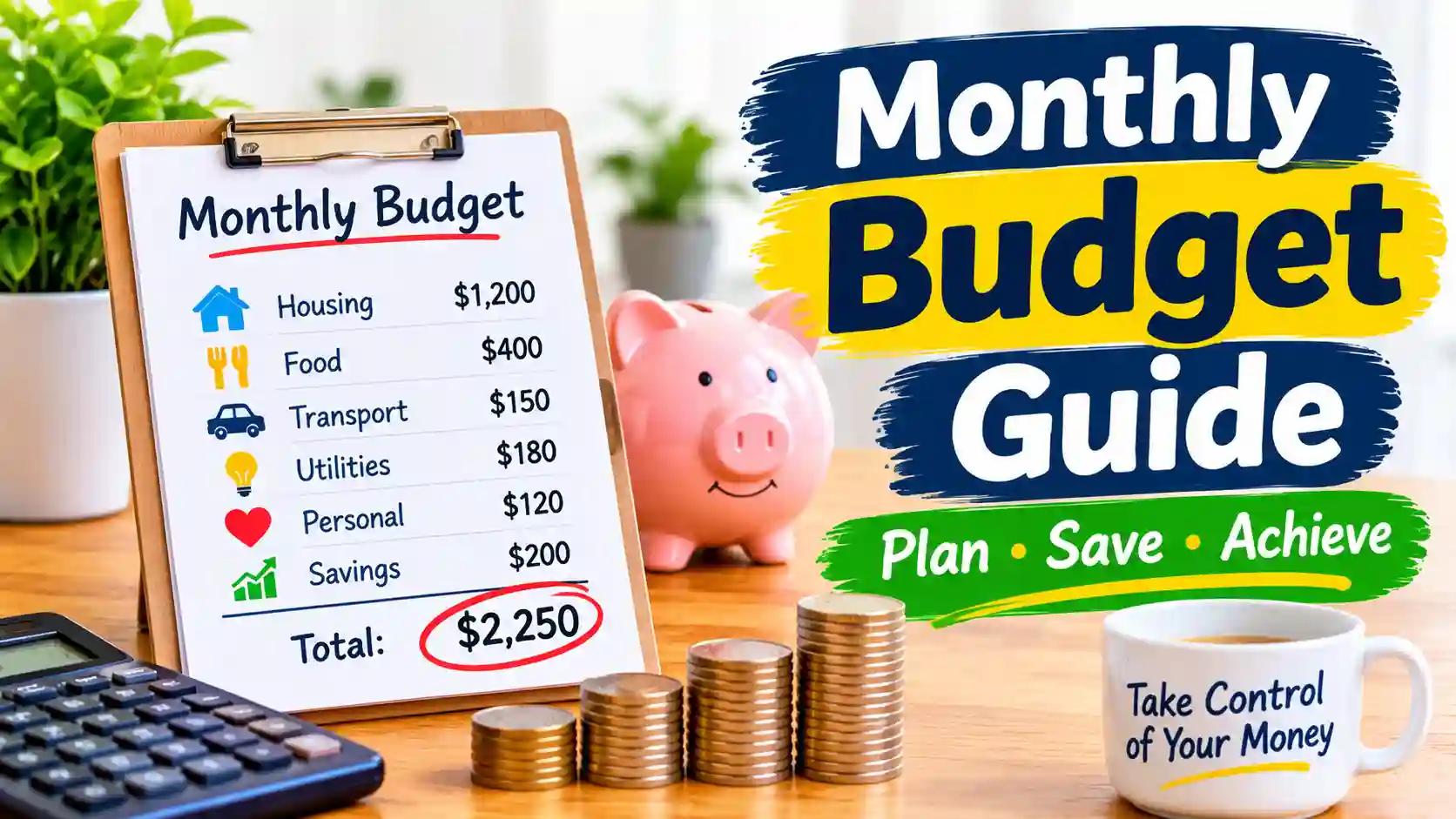
Here is a simplified example of how someone with $3,500 in monthly take-home income might organize a budget. These figures are illustrative only and are not recommended spending amounts for every household.
| Budget Category | Planned Amount |
|---|---|
| Housing | $1,100 |
| Utilities and Internet | $200 |
| Groceries | $400 |
| Transportation | $250 |
| Insurance and Healthcare | $200 |
| Debt Payments | $250 |
| Dining and Entertainment | $200 |
| Personal and Household | $150 |
| Emergency Savings | $250 |
| Other Savings Goals | $200 |
| Irregular Expenses | $100 |
| Total Planned | $3,300 |
| Unallocated Buffer | $200 |
| Monthly Income | $3,500 |
In this example, the person has planned $3,300 of their $3,500 income and kept $200 as a buffer. The buffer can help absorb small differences between estimated and actual expenses.
Your own numbers may look very different. Housing costs, taxes, healthcare, transportation, and family responsibilities vary significantly by location and household.
Tips for Sticking to Your Monthly Budget
1. Keep Your Budget Simple
Start with a manageable number of categories. You can add more detail later if it helps you understand your spending.
2. Automate Regular Savings
If your cash flow allows it, schedule an automatic transfer to savings after payday. Check your account balance and upcoming bills first so the transfer does not cause an overdraft or missed payment.
3. Plan for Irregular Expenses
Set aside money each month for predictable expenses that happen less frequently. This can reduce the pressure when annual or seasonal bills arrive.
4. Use Separate Savings Goals
If your bank or savings provider offers suitable account or savings-bucket features, you may find it easier to organize money for emergencies, travel, repairs, and other goals.
5. Review Subscriptions
Check recurring charges regularly. Cancel services you no longer use and consider whether less expensive alternatives meet your needs.
6. Make Room for Enjoyment
A budget that removes every enjoyable purchase may be hard to maintain. Include a realistic amount for hobbies, entertainment, and occasional treats.
7. Prepare for Payday Timing
If your bills are due before your next paycheck, plan around the actual dates money arrives and payments leave your account. A monthly total alone may not show whether you have enough cash available on a particular day.
Common Budgeting Mistakes to Avoid
Underestimating Everyday Expenses
Small purchases, transportation costs, and household supplies can add up. Use past transactions to create more realistic estimates.
Forgetting Annual and Irregular Bills
Leaving out car maintenance, insurance renewals, and other occasional expenses can make a budget look better than it really is. Plan for these costs throughout the year.
Making the Budget Too Restrictive
If your spending limits are unrealistic, you may stop following the plan. Leave room for reasonable personal spending and adjust your estimates when necessary.
Not Tracking Actual Spending
A budget cannot help much if you never check whether your spending matches the plan. Review transactions regularly, even if you only spend a few minutes doing it.
Ignoring High-Interest Debt
If you carry high-interest balances, include required payments in your budget and consider a realistic repayment strategy. Avoid setting savings targets that leave you unable to meet essential obligations.
Giving Up After One Difficult Month
Unexpected expenses and changing circumstances can disrupt even a thoughtful budget. Review what happened, make reasonable changes, and begin again with the next pay period or month.
Frequently Asked Questions
How do I create a monthly budget for beginners?
Start by calculating your take-home income. List your fixed, variable, and irregular expenses, then set aside money for savings and debt payments. Choose a budgeting method, assign amounts to each category, and track your spending throughout the month.
What is the easiest monthly budgeting method?
The 50/30/20 rule is a simple starting point because it divides income into needs, wants, and savings or debt goals. However, it may need adjustments depending on your income, location, housing costs, and financial responsibilities.
How much of my income should I save each month?
There is no single savings percentage that works for everyone. Your target depends on your income, essential expenses, debt, emergency fund, and goals. Start with an amount you can maintain and increase it when your circumstances allow.
Can I create a monthly budget with irregular income?
Yes. Use a conservative income estimate based on your recent earnings, prioritize essential expenses, and build a cash buffer when possible. Assign additional income to savings, upcoming expenses, or debt after your basic needs are covered.
Should I use a spreadsheet or a budgeting app?
Both can work. A spreadsheet offers flexibility and control, while a budgeting app may make transaction tracking and category management more convenient. Choose a tool that fits your habits, privacy preferences, and budget.
How often should I review my monthly budget?
Check your spending at least weekly and review the full budget at the end of each month. You should also update it whenever your income, bills, or financial priorities change.
What should I do if my expenses are higher than my income?
First, identify the size and causes of the gap. Review flexible spending, check for unused recurring services, and consider whether any bills can be reduced or renegotiated. If essential costs alone exceed your income, you may need broader support, additional income, or advice from a qualified financial counselor.
Final Thoughts
Creating a monthly budget is one of the most practical ways to take control of your everyday finances. It helps you understand your income, plan for expenses, prepare for unexpected costs, and make steady progress toward your goals.
You do not need a perfect plan on the first try. Start with your real numbers, choose a simple budgeting method, and review your spending regularly. Small improvements can make your budget more useful month after month.
The best budget is not the most complicated one. It is the one that reflects your life and helps you make more confident decisions with your money.
Financial Disclaimer
This article is for educational and informational purposes only and should not be considered financial, tax, legal, or investment advice. Your financial circumstances are unique. Consider speaking with a qualified professional before making decisions that could affect your finances.
Meet the Author

Bruce Lee
Bruce Lee is the author behind Nksaas. He focuses on creating accessible personal finance content covering budgeting, saving, credit basics, side hustles and beginner investing concepts.
Email: info.nksaas@gmail.com